
Hippo Home: Maintain & Insure
Hippo Insurance ServicesHouse & Home
4.677.00 Reviews
- Version
- 6.1.0
- Installs
- 50.00K
- Age Rating
- Everyone
Screenshots
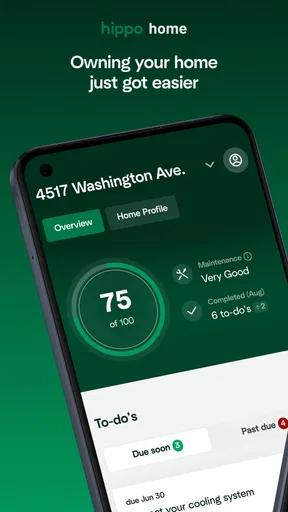
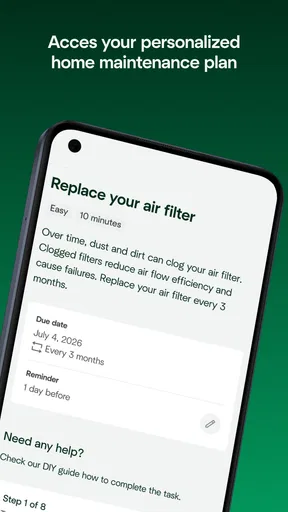
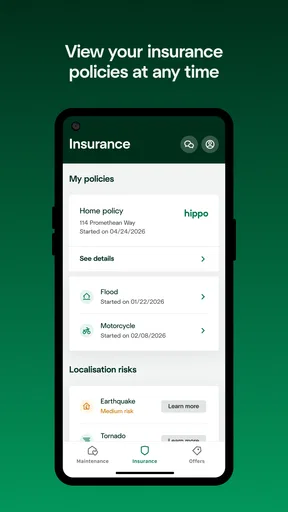

Our Review of Hippo Home: Maintain & Insure
 Analysis by Appyee
I approached Hippo Home as a practical homeownership companion rather than another general household checklist. Developed by Hippo Insurance Services, this free House & Home app is aimed at people who want a clearer way to stay on top of home maintenance and insurance-related responsibilities. After spending time with it, my main impression is that its value comes from bringing those two concerns closer together: looking after the property itself and understanding the protection around it.
Hippo Home is currently available as version 6.1.0 for devices running iOS 11 or later. It is rated for Everyone, which fits the straightforward, household-focused design. The app has an average rating of 4.6 from around 959 ratings, with more than 50 thousand installs. Those figures suggest a healthy level of interest without making the app feel like a mass-market replacement for every home-management tool.
How Hippo Home fits into everyday homeownership
I use Hippo Home as a homeownership aid when everyday tasks start competing for attention. Its focus on maintenance and insurance gives me a useful starting point for thinking about what needs doing and what information I may need later. That makes it worth considering for a shared household, where the next challenge is deciding how to keep responsibilities clear without assuming everyone should use the app in exactly the same way.
A useful starting point for the jobs people postpone
Home maintenance is rarely difficult because every task is complicated. It is difficult because tasks are scattered across seasons, rooms, appliances, receipts, policy documents, and vague memories of what was done last year. Hippo Home is most appealing when used as a central place to turn that loose collection of reminders into a routine.
I find this especially useful for homeowners who are responsible for a property but do not naturally think in maintenance schedules. A new homeowner may know that filters, plumbing, electrical systems, roofing, and safety equipment matter, yet still have no idea how to organize them. An experienced owner may already know the basics but struggle to remember when something was last checked. The app’s home-focused purpose makes it more relevant than a blank notes app, because the starting point is the property rather than an empty page.
That distinction matters. A standard calendar can remind me to do something, but it does not necessarily help me understand why the task belongs on my list. A generic task manager is flexible, but I have to build the structure myself. Hippo Home is better suited to the person who wants household responsibilities presented in a more recognizable context.
Where it helps during a normal week
Imagine moving into a house and discovering that the previous owner left a stack of manuals, inspection papers, and service notes. Instead of keeping everything in a drawer, I would use the app as the place to establish a working record of the property. I could review what needs attention, connect maintenance habits with insurance awareness, and create a more deliberate routine before a small oversight becomes an expensive surprise.
Another realistic use is preparing for a change of season. Before colder weather, I might use the app to think through the parts of the home that deserve attention, then handle the work in stages rather than trying to remember everything on one weekend. The benefit is not that the app magically completes the work. The benefit is that it gives the work a visible place in my planning.
For renters, the fit is less obvious. Some maintenance guidance can still be useful for noticing problems early, but renters usually do not control major systems or repair schedules. The strongest audience is someone who owns a home, shares responsibility for one, or wants a more organized view of property care and insurance readiness.
The connection between maintenance and insurance
The most distinctive part of this app’s positioning is the relationship between home upkeep and insurance. Those subjects are often treated separately: one app or notebook for chores, another folder for coverage, and a third place for emergency information. Hippo Home tries to make the connection feel more natural.
That does not mean I would treat it as a substitute for reading an insurance policy. Coverage terms, exclusions, deductibles, claim procedures, and local requirements still deserve careful attention in the relevant documents. Instead, I see the app as a practical layer around those responsibilities. It can encourage better preparation and make homeownership feel less reactive.
This is an important trade-off. Someone looking only for a powerful renovation planner may find the insurance angle unnecessary. Someone who wants a simple bridge between protecting the house physically and keeping its information organized may find that angle genuinely useful.
What the current version says about the product’s direction
The current release is version 6.1.0, while the app first appeared on February 28, 2022. That history gives me the impression of a product that has had time to develop beyond an initial launch rather than arriving as an untested concept. I would still separate that observation from any promise about future additions: a version number shows ongoing product evolution, not a guarantee of what comes next.
For an existing user, a newer version can be reassuring because it indicates that the app is being maintained as a living product. It also means that the experience may feel more refined than an early release. However, I would not install an update assuming that every personal frustration has been solved. Version progression is useful context, but the day-to-day value still depends on whether the current workflow matches the way I manage my home.
What existing users may notice over time
If I were already using the app, I would judge its evolution by practical questions rather than by the version label alone. Does it make recurring responsibilities easier to remember? Does it reduce the number of places where I keep home information? Does it help me act before a maintenance issue becomes urgent? Those are the changes that matter more than a cosmetic refresh.
I would also revisit my setup after an update instead of assuming everything remains exactly as I left it. Home apps are most useful when their information stays current. A new address, appliance replacement, renovation, ownership change, or updated insurance arrangement can make an old record misleading. The best habit is to treat the app as a working home file, not a one-time setup screen.
One non-obvious advantage is that maintenance records can improve conversations with other people. If a partner, family member, landlord, contractor, or insurer needs context, a more organized record is easier to discuss than a collection of half-remembered dates. The app does not remove the need to verify details, but it can reduce the friction of getting everyone aligned.
Practical ways I would get more from it
I would begin with the tasks that are easiest to forget and most expensive to ignore. That usually means anything involving water, heating, cooling, electrical safety, exterior protection, or emergency preparation. Building a manageable foundation is better than trying to document every object in the home immediately.
My second tip is to use the app as a prompt for inspection, not merely as a box-ticking exercise. When a task appears, I would look for visible warning signs, record what I actually observed, and note whether the next step belongs to me or to a qualified professional. This prevents a maintenance reminder from creating false confidence. A completed reminder is not proof that a system is safe or that a repair was done correctly.
Third, I would keep the app alongside—not instead of—important source documents. Policy paperwork, invoices, warranties, inspection reports, and professional advice each have their own value. Hippo Home can help me remember and organize the surrounding work, but I would not rely on a short note as the only evidence of a major repair or coverage decision.
A fourth useful workflow is to review the home after a significant change. If I install a new appliance, finish a renovation, discover a leak, or make a claim, I would use that moment to update my home information and reconsider related maintenance tasks. This is more effective than waiting for an annual burst of organization, when details may already be forgotten.
Where the usual alternatives are stronger
A calendar remains better for appointments with contractors, inspections, and fixed dates. It is familiar, shared, and excellent for events that involve another person. A general task manager is stronger when I need elaborate dependencies, project stages, labels, or custom workflows. A spreadsheet can be better for detailed inventories, costs, serial numbers, and renovation budgets.
Hippo Home makes more sense when the starting point is homeownership itself. Its advantage is context. I do not have to design a home-maintenance system from nothing, and I can think about upkeep and protection together. The disadvantage is that a focused app may feel restrictive to users who want a fully customized property database or a detailed construction-management tool.
I would also choose a specialized emergency or smart-home product when the main need is live monitoring, device automation, or immediate alerts from connected equipment. Hippo Home should not be judged as though it were a security hub or a professional project-management suite. Its role is more preventive and organizational.
Remaining gaps and everyday friction
The biggest limitation is the human element. No home app can inspect a roof, shut off a dangerous electrical circuit, diagnose a hidden leak, or decide whether an insurance claim is appropriate. I still have to open the app, understand the reminder, and follow through. If I ignore notifications or fail to keep information updated, its usefulness declines quickly.
There is also a possible learning curve around deciding how much information to enter. A homeowner who wants a complete digital archive may need another tool for deep documentation. Someone who enters almost nothing may not get enough value from the app to justify maintaining it. The right balance is to save information that will help with a future decision, conversation, repair, or claim, rather than attempting to record every minor detail.
Privacy and trust deserve a thoughtful approach whenever an app relates to a home and insurance. I would review the app’s current permissions and privacy terms before adding sensitive material, and I would avoid treating the phone as the only copy of critical documents. That is not a criticism unique to this product; it is sensible practice for any digital home record.
Another limitation is audience fit. If I already have a carefully maintained system in a spreadsheet, calendar, cloud folder, and smart-home platform, adding another layer may create duplication. The app is most valuable when it simplifies a scattered process, not when it forces an already organized user to rebuild everything.
Who should try it, and who should skip it
I would recommend giving it a serious look if you recently bought a home, inherited responsibility for a property, share maintenance duties with someone else, or repeatedly remember important work only after a problem appears. It is also a sensible option for people who want home care to feel connected to insurance awareness rather than treating both as unrelated chores.
I would be more cautious if I needed advanced budgeting, contractor bidding, detailed renovation timelines, live sensor monitoring, or a highly customizable asset database. In those situations, a dedicated tool may be a better primary system, with Hippo Home used only if its home-and-insurance focus adds something missing.
The free price removes one common barrier to trying it, but free does not mean effortless. I would give it enough time to establish a useful home routine, then decide whether it actually reduces mental clutter. If it only duplicates reminders I already manage well, there is little reason to keep another app.
What I would watch as the product continues
For future updates, I would watch for improvements that make shared home responsibility easier, strengthen record organization, and clarify the handoff between a maintenance reminder and a real-world action. I would also value changes that help users distinguish routine upkeep from situations requiring a licensed professional or direct policy review.
Those are expectations, not claims about features that are already present. The current evidence is the maintained version 6.1.0 and the app’s continued place in the House & Home category. Whether future releases become more useful will depend on how well they preserve simplicity while handling the messy details of real properties.
My final take
Hippo Home is a focused tool for making homeownership feel more deliberate. I like that it does not treat maintenance as an isolated chore and that its connection with insurance gives the app a clearer purpose than a generic checklist. For me, its strongest use is building a repeatable routine: notice what needs attention, keep the relevant context together, and act before a small issue becomes a major interruption.
It is not a replacement for professional inspections, policy documents, emergency services, a calendar, or a detailed renovation system. Its value depends on regular use and sensible judgment. Still, for a homeowner who wants a free, approachable way to organize upkeep and think more seriously about protecting the property, I would recommend trying it. The best result is not a perfectly documented house; it is a homeowner who is less likely to be surprised by the next task.
Verdict
Strengths of Hippo Home: Maintain & Insure
- Combines home maintenance tracking with insurance management in one app.
- Helps organize property documents, warranties, and service records digitally.
- Maintenance reminders can reduce the risk of overlooked household tasks.
- Useful overview of recurring home costs and upcoming responsibilities.
- May simplify communication with contractors and insurance providers.
Limitations of Hippo Home: Maintain & Insure
- Features may depend on regional insurance and service-provider availability.
- Requires entering detailed property information for the best experience.
- Insurance tools may not replace advice from a qualified insurance professional.
- Some users may find ongoing reminders excessive or difficult to customize.
- Cloud-based home records require trust in the app’s privacy and data security.
Similar Picks in This Category
View All
Universal TV Remote Control
CodeMatics Media Solutions3.9

AlfredCamera Home Security app
Alfred Systems Inc.4.7

Planner 5D: AI Home Design
Planner 5D4.5

Universal Tv Remote-Cast to TV
One Music Player4.1

Zillow: Homes for Sale & Rent
Zillow Group4.8

99acres Buy/Rent/Sell Property
infoedge.com4.3
Frequently Asked Questions
What is Hippo Home: Maintain & Insure?
Hippo Home: Maintain & Insure is a home-management app designed to help homeowners organize maintenance tasks, keep important property information in one place, and manage home insurance-related needs. After setting up your home profile, you can use the app to track upkeep, access helpful guidance, and stay more prepared for repairs, emergencies, and conversations with insurance or service professionals.
Can I use Hippo Home: Maintain & Insure if I am not a Hippo insurance customer?
The app is primarily built around Hippo’s home insurance and home-care experience, so some features may depend on your location, policy status, or eligibility. Non-customers may be able to access certain home-maintenance resources, but insurance tools, policy information, claims support, or personalized recommendations could be limited. Check the app’s current availability and requirements before downloading.
What information does the app require during setup?
Setup may ask for details about your home, such as its address, property characteristics, systems, appliances, and maintenance history. If you use Hippo insurance services, you may also need account or policy information to access personalized features. Providing accurate data can make reminders and recommendations more useful, although you should review permissions and avoid entering information you are not comfortable sharing.
Does Hippo Home: Maintain & Insure replace a contractor or insurance professional?
No. The app can help you organize maintenance, understand common home-care tasks, and prepare information for an insurer or service provider, but it does not replace qualified contractors, emergency services, inspectors, or licensed insurance professionals. For urgent problems such as gas leaks, electrical hazards, flooding, fire, or structural damage, contact the appropriate emergency or professional service immediately.
Is Hippo Home: Maintain & Insure free to download and use?
The app may be available to download without an upfront charge, but access to particular features can depend on your insurance relationship, location, account type, or additional services. Standard mobile data charges may also apply. Because pricing, eligibility, and included tools can change, review the latest information in the Google Play Store or Apple App Store before installing or relying on the app.
